

The front panel of a control panel in a device or equipment is more than just a faceplate, but a crucial interface between user and machine. Acrylic panels and polycarbonate panels are the most commonly used front panels across various industries.
In this guide, we’ll explore the differences in appearance, applications, durability and more to help you select the best option for your graphic overlays or control panels projects.
How Do Acrylic Panels and Polycarbonate Panels Differ?
For control panel designers, understanding the differences between acrylic panels and polycarbonate panels is essential for making informed decisions that balance performance and aesthetics. Choosing the right material impacts durability, visual appeal, manufacturing processes, cost and ultimately user experience.
Appearance Comparison

Let’s start by examining the differences in the form factor and appearance of these two front panels. Our comparison focuses is based on panles with a substrate that is more than 0.8mm thick.
| Features | Acrylic (PMMA) Panels | Polycarbonate (PC) Panels |
| Rigidity | Rigid | Flexible |
| Flexibility | Can’t Bend | Easier to Bend |
| Surface | High Gloss Finish and Refined Aesthetics | Can Have Gloss Matte/Frosted Treatment |
| Optics | Excellent Light Transmission (92%) | Good Light Transmission (89%) |
| Cleanability | Easy to Clean | Easy to Clean |
| Cost | Higher Price | More Cost-effective |
Substrate Material Comparasion
Material substrate is crucial for custom graphic overlays. The right material dictates durability, optical performance, tactile feel, and environmental resistance, ultimately determining the overlay’s success and user experience. As its name indicated, acrylic panels are made acrylic sheets, while polycarbonate panels are made of polycarbonate. Now, let’s check the diffferences between these two materials.

- Acrylic (PMMA)
Acrylic (PMMA) is a rigid, transparent thermoplastic known for its exceptional clarity, gloss, and scratch resistance. It offers excellent light transmission, making it suitable for backlit applications. Acrylic is relatively easy to machine and fabricate, but it is less impact resistant than polycarbonate and can crack or shatter under stress. While offering good chemical resistance to many cleaning agents, it can be susceptible to certain solvents. - Polycarbonate (PC)
Polycarbonate (PC) is a tough, durable thermoplastic known for its outstanding impact resistance, temperature resistance, and inherent flame retardancy. It is more flexible than acrylic and can be thermoformed into complex shapes. Although it offers good clarity and light transmission, it’s typically not as clear as acrylic and may have a slight yellowish tint. PC is more challenging to machine than acrylic.
Applications Comparison
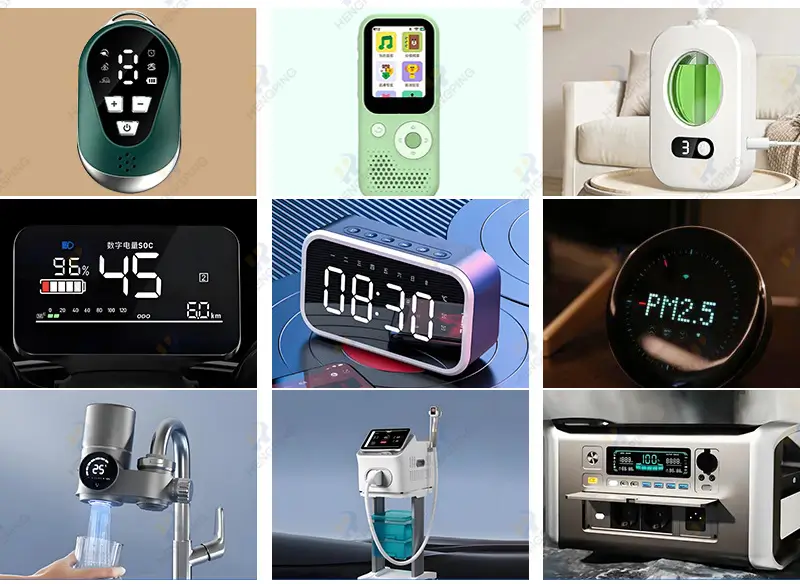
- Acrylic (PMMA) Panels: It is ideal for applications where aesthetics, clarity, and scratch resistance are paramount.
- High-end Consumer Electronics;
- Medical Devices and Equipment;
- Home Appliances and Smart Home Devices;
- Touchscreens;
- EV Charging Pile;
- Lenses and Optical Components;
- Polycarbonate (PC) Panels: It is preferred for applications requiring impact resistance, durability, and temperature stability.
- Industrial Control Panels and Equipment;
- Instrumentation/Gauges;
- Automotive Dashboards;
- Telecommunications Equipment;
- Membrane Switches and Keypads;
When choosing between acrylic panels and polycarbonate panels, consider your project’s environment (impact, temperature, chemicals, UV), optical needs (clarity, color, diffusion), design requirements (rigidity, formability, size), and budget. PC prioritizes durability and complex shapes, while acrylic excels in clarity, scratch resistance, and often cost-effectiveness. Match the material to your specific priorities.
Still unsure about which panel material is right for your project? Have other questions about acrylic panels or polycarbonate panels? We’re expert panel manufacturers and are happy to help! Reach out to us with your specific needs and we’ll guide you to the perfect solution. We’re here to make your project a success.
Case Study
With over a decade of experience under our belt, we’ve tackled a wide range of projects. Let us share two common and effective applications for acylic panels and polycarbonate panels.
Home Appliances Adopting Acrylic Panels
Acrylic is an excellent choice for smart home appliance panels due to its sleek, modern aesthetic. Its inherent high-gloss finish adds a touch of elegance to any appliance, while its exceptional clarity ensures crystal-clear displays for easy readability. Furthermore, acrylic offers vibrant color reproduction, enabling visually appealing interfaces with bright, saturated colors.
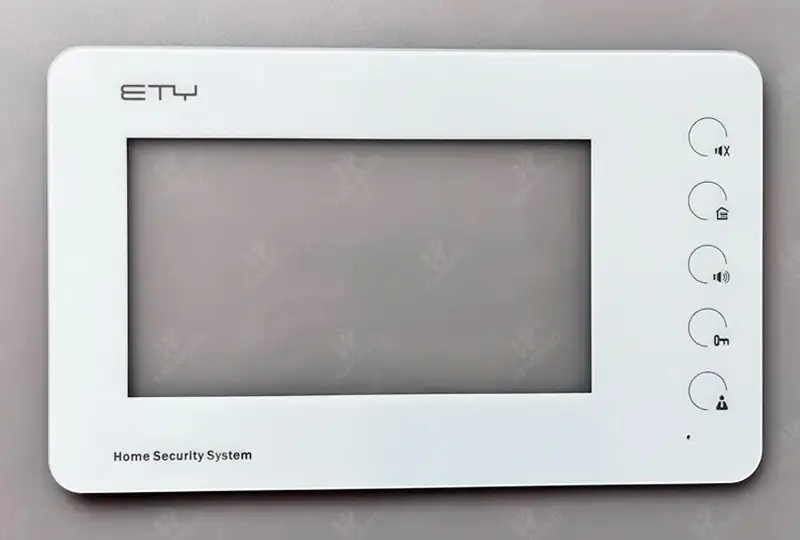
The application of a hard coating (up to 6H) further enhances its scratch resistance, maintaining the panel’s pristine appearance despite frequent use. This combination of aesthetic and practical benefits makes acrylic panels a cost-effective solution for control panels of home appliances. Additionally, acrylic’s light transmission properties make it ideal for backlighting, enhancing visibility in various lighting conditions. From touchscreens to control panels and decorative elements, acrylic offers versatility and performance for smart home applications.
Automobile Dashboard Adopting Polycarbonate Panels
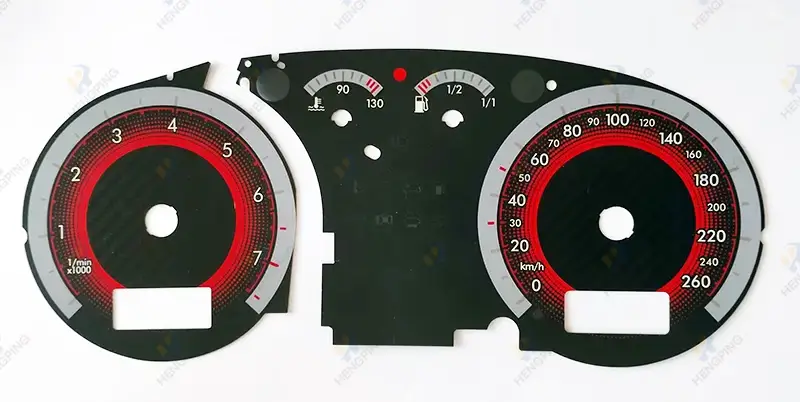
For automotive dashboards, polycarbonate (PC) panel is the preferred due to its unique combination of durability and optical performance. High-precision printing capabilities allow for intricate details and crisp text without imperfections, while matte or frosted finishes reduce glare and minimize driver eye strain. PC panels also allow for selective light transmission, meaning specific areas can be backlit for optimal visibility while other areas remain opaque, creating a sophisticated, high-tech look.
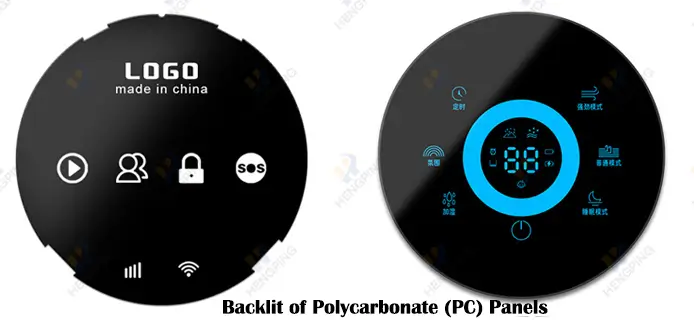
Critically, PC’s impact resistance contributes to passenger safety, and its high heat resistance prevents warping or deformation even under intense sunlight. This blend of functionality, durability, and design flexibility makes polycarbonate the ideal choice for demanding automotive environments.
Related Questions
How Does Acrylic Handle UV Exposure and Weathering? Will It Yellow over Time?
Acrylic panels, in their standard formulation, are susceptible to degradation from prolonged UV exposure. Over time, this can lead to yellowing, a reduction in clarity, and embrittlement. The rate of degradation depends on the intensity and duration of UV exposure, as well as environmental factors like temperature and humidity. While acrylic is generally weather-resistant and handles rain and moisture well, the UV component of sunlight is the primary concern for long-term outdoor use.
However, UV-resistant grades of acrylic are readily available. These formulations incorporate UV absorbers that significantly slow down the degradation process, extending the lifespan and preserving the appearance of the panels in outdoor applications. While even UV-resistant acrylic may experience some minor changes over many years of intense sun exposure, it offers a significantly improved solution for outdoor signage, displays, and other applications.
What Temperature Range can Polycarbonate Handle without Deforming?
Polycarbonate panels are known for their excellent temperature resistance and dimensional stability. Standard grades of polycarbonate can typically withstand temperatures ranging from -40°C (-40°F) up to 120°C (248°F) without significant deformation or loss of mechanical properties. Specialized high-temperature grades are available that can tolerate even higher temperatures, typically up to 140°C (284°F) or more.
It’s important to consider that continuous exposure to temperatures at the upper end of this range can gradually degrade the material over time. However, within its specified operating temperature range, polycarbonate maintains its shape, impact resistance, and other key properties, making it well-suited for demanding applications in various environments.
Conclusion
Choosing the right graphic overlay is a critical decision that significantly impacts your final product. As you’ve seen, both acrylic panels and polycarbonate overlay panels offer distinct advantages. Acrylic excels with brilliant clarity, vibrant color reproduction, and scratch resistance, so acrylic panels are ideal for applications where aesthetics are paramount. While, polycarbonate shines with exceptional impact resistance, durability, and resilience in demanding environments, making polycarbomte panels the preferred choice for rugged applications.

At Hengping Industry, we understand the nuances of these graphic overlays materials and offer both acrylic and polycarbonate graphic overlays precisely tailored to your project needs. We don’t just provide overlays, but also provide partnership. Our team has extensive experience guiding clients through the material selection process, ensuring the chosen overlay aligns perfectly with the design, functionality and budget.
Whether you’re unsure which material is best, need help with design specifications, or have questions about our manufacturing capabilities, we encourage you to contact us today. Our dedicated team is ready to offer personalized guidance and support, helping you find the perfect graphic overlay solution to elevate your product and enhance its user experience.



 English
  French
  German
  Spanish
  Portuguese
  Italian
  Dutch
Dutch  Turkish
  Russian
  Arabic
  Japanese
  Korean
  Vietnamese
  Thai
Thai  Indonesian