 Skip to main content Skip to footer


Graphic overlays are far more common in everyday life than we realize. They are just like a custom-tailored “skin” on countless devices and products, enhancing both aesthetics and durability. Ever wondered what materials are used to make graphic overlays on your appliances, instrument, and even industrial equipment?
Graphic overlays are typically made from polycarbonate (PC), polyester (PET), PVC or acrylic (PMMA) for durability, clarity, and resistance to abrasion. Metal and vinyl (often in the form of PVC, or polyvinyl chloride) are also used for specific applications requiring strength or cost-effectiveness.

The choice of materials for these graphic overlays is critical, directly impacting the lifespan, performance, user experience, overall look and other aspect of your product or device. This article discusses materials that can be used for graphic overlay processing and help you to make an informed decision about the design and processing of your graphic overlay projects.
Commonly Used Graphic Overlays Materials
In fact, graphic overlays can be made from a variety of materials, including polycarbonate (PC), polyester (PET), polyvinyl Chloride (PVC), acrylic (PMMA), and metal (not discussed here). Below is a brief overview table of these materials for graphic overlays.

Graphic Overlay Materials Main Technical Parameters
| Material | Polycarbonate (PC) | Polyester (PET) | Polyvinyl Chloride (PVC) | Acrylic (PMM) |
|---|---|---|---|---|
| Thickness | 0.175~6.0mm | 0.125~0.2mm | 0.2~3mm | 0.5~10.0mm |
| Temperature Resistance | -40~120℃ | -40~150℃ | -10~60℃ | -40~80℃ |
| Colors | Transparent/Variety | Transparent/Variety | Variety | Transparent/Variety |
| Transparency | High | High | Low | High |
| Environmental Impact | Recyclable | Recyclable | Not Fully Recyclable | Recyclable |
| Cost | High | Moderate | Low | High |
| Typical Applications | Industrial Control Panels, Automotive Dashboards, Medical Devices, Eelectronics Displays, etc. | Keypads, Membrane Switches, Household Appliances, POS Displays, etc. | Membrane Switches, Labels, Decals, etc. | Backlit Keypads, Protective Front Panels, Industrial Control Panels, Medical Devices, Instruments, etc. |
PVC is not environmentally friendly and less commonly used for graphic overlays in today’s market. So, here we introduce the most important and common materials used to fabricate graphic overlays.
Polycarbonate (PC)
Polycarbonate, abbreviated as PC, is a high-performance, transparent thermoplastic polymer made from the polymerization of bisphenol A (BPA) and phosgene. Polycarbonate is featured with superior properties is often used in applications requiring high impact resistance, high-temperature stability, and optical transparency. So, it is a great material for graphic overlays.
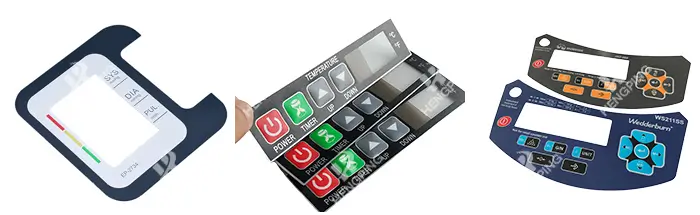
Advantages of Polycarbonate for Graphic Overlays
- High Impact Resistance: Polycarbonate is known for its exceptional toughness. It is up to 250 times stronger than glass and has a high resistance to cracking or breaking, making it ideal for graphic overlays that will be exposed to rough handling or harsh conditions.
- Optical Clarity: Polycarbonate has excellent transparency, making it ideal for clear or backlit graphic overlays, such as those used in control panels, displays, and screens. It allows for clear visibility of the underlying text, symbols, and graphics.
- Scratch Resistance: Polycarbonate is naturally prone to scratches, but it can be treated with hard coatings to significantly improve scratch resistance. This is particularly beneficial for high-traffic areas or applications where the overlay may come into contact with hands or objects regularly.
- UV Resistance: Polycarbonate can be treated to resist UV radiation, preventing yellowing or degradation over time, which is especially important in applications where the graphic overlay will be exposed to sunlight or UV light (e.g., outdoor displays, dashboards, etc.).
- Chemical Resistance: Polycarbonate offers good resistance to a range of chemicals, including acids, alkalis, and cleaning agents, which is crucial in environments where cleaning or exposure to harsh substances is common (e.g., industrial, medical, or laboratory settings).
- Design Flexibility: Polycarbonate is highly moldable and can be formed into intricate shapes, offering great flexibility in design. It can also be printed on easily, allowing for precise and vibrant graphics on the surface of the overlay.
- Thermal Stability: Polycarbonate can withstand a wide range of temperatures, making it suitable for both hot and cold environments. This makes it ideal for applications in various industrial and electronic settings.
Main Applications of Polycarbonate Graphic Overlays
Polycarbonate graphic overlays are widely used in industries that demand high durability, clarity, and resistance to harsh conditions. Here are some of the primary applications:
- Automotive Dashboards
- Industrial Control Panels
- Household Appliances
- Instrument Labels
- Military and Aerospace equipment
- Medical Equipment Displays
- Kitchenware
- High-impact Consumer Electronics
- Security System Interfaces
- Transportation Displays
Surface Treatment of Polycarbonate Graphic Overlays
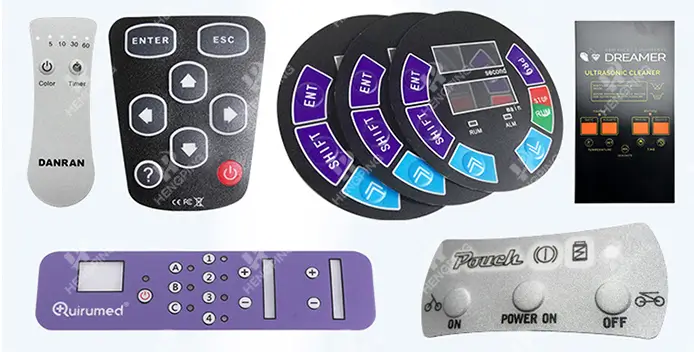
- Embossing
- Matte/Gloosy Finish
- Brushed Finish
- Textured Finish
- Hot Stamping
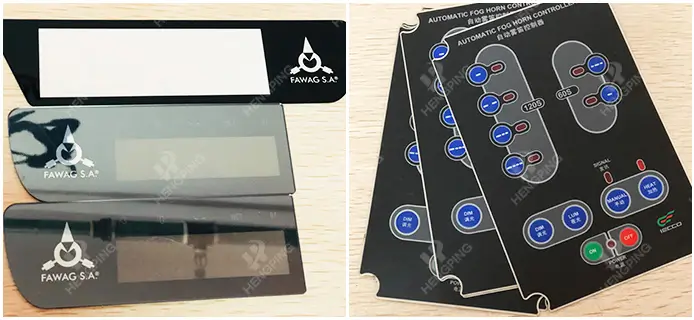
- Dead Front Effect
- Anti-UV Coating
- Anti-Fingerprint Coating
- Anti-Scratch Coating (Hard Coat)
- Anti-Glare/Anti-Reflective Coating
Polyester (PET)
Polyester (PET), specifically Polyethylene Terephthalate (PET), is a synthetic thermoplastic polymer made from the polymerization of terephthalic acid and ethylene glycol. It is a versatile material widely used in various forms, including fibers, films, and resins. In the context of graphic overlays, PET is typically used in its film or sheet form.

Advantages of Polyester for Graphic Overlays
Polyester (PET) is a highly versatile material for graphic overlays, offer a vast of advantages, including:
- Durability: Polyester is known for its excellent abrasion resistance and dimensional stability, which makes it ideal for environments with frequent usage and wear. Overlays made from PET can withstand heavy pressing, repeated interactions, and general wear and tear without losing their shape or quality.
- Chemical Resistance: Polyester offers good resistance to a wide range of chemicals, including acids, oils, and alkalis, which makes it highly suitable for environments where graphic overlays are exposed to chemicals (e.g., industrial control panels or laboratory equipment).
- High-Quality Printing: PET film is known for its excellent printability, making it ideal for vibrant and precise graphics. It allows for high-quality screen printing, digital printing, and flexographic printing, ensuring that logos, labels, and text are clear, sharp, and long-lasting.
- Lightweight: Polyester is relatively lightweight compared to other materials like polycarbonate (PC) or acrylic (PMMA), making it a good choice for applications where reducing weight is a factor (e.g., portable devices or consumer electronics).
- Transparency and Color Options: Polyester offers good optical clarity, allowing for transparent overlays or labels that enable easy reading of underlying displays or controls. It can also be easily produced in a variety of colors and finishes (e.g., matte, gloss, frosted).
- Cost-Effective: Polyester is generally more affordable than other materials like polycarbonate or acrylic, making it a good choice for cost-sensitive applications where performance and aesthetic quality are still important but at a lower price point.
- Environmentally Friendly: PET is recyclable and is considered more environmentally friendly compared to materials like PVC or vinyl. This makes it a good choice for sustainable manufacturing practices, especially in applications where eco-friendliness is a key concern.
- Flexibility: Polyester films are quite flexible, making them suitable for curved surfaces or membrane switches. This flexibility enables the production of overlays that can conform to irregular shapes or devices.
Main Applications of Polyester Graphic Overlays
Polyester (PET) is used in a wide range of industries for graphic overlays due to its durability, printability, and chemical resistance.
- Consumer Electronics
- Home Appliances
- Medical Device Panels
- Remote Controls
- Point-of-sale Displays
- Indoor Signage
- Packaging Equipment
- Light Industrial Equipment

Surface Treatment of Polyester Graphic Overlays
- Matte/Gloosy Finish
- Textured Finishes
- Embossing
- Anti-Scratch Coating
Acrylic (PMMA)
Acrylic (PMMA), also known as Polymethyl Methacrylate, is a transparent thermoplastic polymer commonly used as a lightweight, shatter-resistant alternative to glass. Acrylic is produced by polymerizing methyl methacrylate (MMA), a liquid monomer. It is often referred to by brand names like Plexiglass, Lucite, or Acrylite.

Advantages of Acrylic for Graphic Overlays
- High Optical Clarity: Acrylic is one of the clearest plastic materials available, with light transmission rates of up to 92%, similar to glass. This makes it ideal for transparent overlays, light diffusers, and backlit panels where visibility is critical.
- UV Resistance: Acrylic is highly resistant to UV radiation, which helps prevent it from yellowing or degrading over time when exposed to sunlight. This makes it ideal for outdoor applications or in environments where the graphic overlay will be exposed to UV light for extended periods.
- Scratch Resistance: Acrylic is more scratch-resistant than other plastics like polycarbonate (PC), which helps maintain the aesthetic quality of the overlay over time. However, it is still more prone to scratching than harder materials, so protective coatings may be applied to enhance scratch resistance.
- Lightweight: Acrylic is much lighter than glass, making it easier to handle and install, and reducing the overall weight of the final product. This makes acrylic ideal for use in portable devices and large displays.
- Easy to Fabricate: Acrylic is easy to cut, drill, and shape with common tools. It can be easily formed into custom shapes, which makes it suitable for a wide variety of design requirements in graphic overlays.
- Durability: Acrylic offers good durability and is resistant to impact to a certain extent, although it is not as tough as polycarbonate. It is, however, more resistant to impact than glass and can be used for overlays in environments that need good protection from light impacts.
- Weather Resistance: Acrylic is resistant to weathering, moisture, and environmental factors, which makes it ideal for outdoor signage or displays where the graphic overlays will be exposed to the elements.
- Ease of Printing: Acrylic surfaces can be easily printed on with various printing techniques (screen printing, UV printing, etc.), making it a suitable material for high-quality graphics and vibrant color reproduction on overlays.
- Versatile Aesthetic: Acrylic can be manufactured in a wide range of colors, textures, and finishes (matte, gloss, frosted, etc.), allowing for highly customizable graphic overlays that suit various branding and design requirements.
Main Applications of Acrylic for Graphic Overlays
Acrylic’s versatility, high clarity, and durability make it an ideal choice for a variety of graphic overlay applications. Here are some of the main applications where acrylic panel graphic overlay is commonly used:
- High-end Consumer Electronics Displays
- Industrial Control Panels
- Kiosks and Interactive Displays
- Medical Equipment Displays
- Public Information Displays
- Instrument Panels (high-end)
- Point-of-sale Systems
- Protective Overlays for Delicate Graphics
- Museum Exhibit Displays
- Architectural Signage
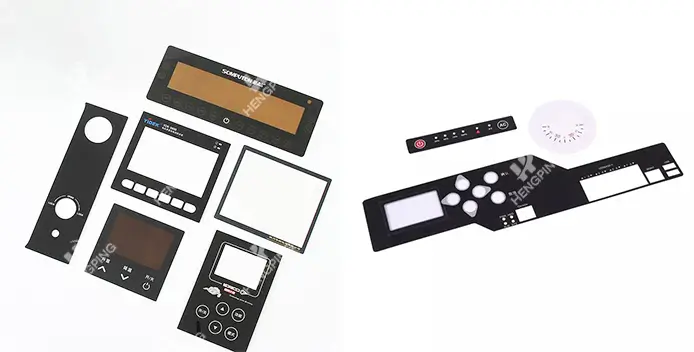
Surface Treatment of Acrylic Panel Graphic Overlays
- Gloosy Finish
- Dead Front Effect
- Anti-Scratch Coating (Hard Coat)
- Anti-Fingerprint Coating
- Anti-Glare/Anti-Reflective Coating
- Anti-UV Coating
Graphic Overlays Materials Selection Guide
Choosing the right material for a graphic overlay project depends on various factors. Below are the key criteria and steps to help you select the most suitable material for your graphic overlay applications:

1. Application Environment
- Indoor vs. Outdoor Use: Determine whether the graphic overlays will be exposed to harsh outdoor elements (e.g., sunlight, rain, dust, temperature fluctuations). For outdoor applications, materials with UV resistance and weathering capabilities, like polycarbonate (PC) or acrylic (PMMA), may be more suitable.
- Chemical Exposure: Will the graphic overlay be exposed to chemicals, oils, or solvents (e.g., in industrial or medical environments)? Materials like polyester (PET) or polycarbonate may be preferred due to their chemical resistance.
2. Durability and Impact Resistance
- Heavy Usage and Impact Resistance: Consider how frequently the graphic overlay will be touched or interacted with. If it’s in a high-use environment or subjected to frequent impact, a polycarbonate (PC) overlays would be ideal due to its excellent impact resistance.
- Scratch Resistance: If the graphic overlay will experience abrasion or scratching (e.g., from constant use of keypads or buttons), acrylic or polycarbonate may be better choices, especially if treated with additional coatings (e.g., anti-scratch) for enhanced scratch resistance.
3. Optical Clarity and Transparency
- If high visibility and clarity are required (e.g., in displays, backlit overlays, or medical devices), materials like polycarbonate and acrylic are ideal because they offer high optical clarity.
- If transparency is not essential and you want a more cost-effective solution, polyester could work well in applications where visibility of the underlying display is not as critical.
4. Flexibility and Fabrication Needs
- Flexible Overlays: If the graphic overlay needs to conform to curved surfaces, polyester (PET) may be better due to their flexibility.
- Ease of Fabrication: Consider how easy it is to fabricate the material. Polycarbonate and acrylic are easy to cut, drill, and shape, while polyester provides ease of printing and can be digitally printed or screen printed for high-quality graphics.
5. Printability
Graphic overlay printing is a very important process in the manufacturing of graphic overlays and can directly impacts the final look, readability, and functionality of the overlay.

- Consider whether the material allows for high-quality printing (e.g., screen printing, UV printing, digital printing). Polyester (PET) and acrylic are excellent choices for printing vibrant graphics or detailed icons.
- Polycarbonate also offers good printability but may require special coatings or printing techniques, especially for durability in high-use environments.

6. Aesthetic Appearance
- Finish and Texture: The finish and texture of the graphic overlay are crucial for its visual appeal. Acrylic can provide a glossy finish, while polycarbonate and polyester offers more matte and frosted finishes.
- Color Options: Different materials allow for different coloring and printing capabilities. For instance, polycarbonate and acrylic allow for vibrant graphics with high clarity, while polyester can be printed with high-quality images and designs.
7. Environmental Considerations
- Sustainability: Consider choosing eco-friendly materials such as polyester (which is recyclable), as sustainability becomes increasingly important in manufacturing.
- Regulatory Compliance: Some industries have specific regulations on material safety (e.g., medical devices, food packaging). Ensure the selected material complies with the necessary standards for your applications.
8. Cost and Budget
- Material Costs: Polyester is typically more affordable than polycarbonate and acrylic, making it a great option for high-volume, low-cost applications. However, for more premium applications (e.g., in automotive or medical devices), polycarbonate or acrylic may justify their higher cost with superior durability and performance.
- Manufacturing Costs: The complexity of the design and required features (e.g., backlighting, UV resistance) can affect manufacturing costs. Materials that are easy to work with, like polyester and acrylic, may save on production costs compared to more complex materials like polycarbonate.
Conclusion
Choosing the suitable material for graphic overlays is crucial for a project since it have direct impact on the performance, durability, aesthetic appeal, user experiences and price of the final products. If you have no idea about how to make a decision, please make sure to choose a reliable and professional graphic overlays supplier since it can help you to choose the right graphic overlay materials based on your specific applications and requirements.
Hengping Industry can provide expert advice about graphic overlays customization and solve all your purchasing and technical problems. Any questions, just contact us directly!



 English
 French
 German
 Spanish
 Portuguese
 Italian
 Dutch
 Turkish
 Russian
 Arabic
 Japanese
 Korean
 Vietnamese
 Thai
 Indonesian
