

Standardization of industrial pipe labeling is crucial for safety and efficiency. Clear markings enable rapid identification of pipe contents, facilitating prompt and appropriate responses to incidents, preventing injuries, environmental damage, and improving maintenance efficiency.
The United Kingdom, a nation with a rich industrial history and extensive infrastructure, relies heavily on comprehensive pipe labeling systems across a wide range of sectors. From energy and chemical processing to water management and manufacturing, clear and consistent pipe marking is essential for safety, efficiency, and regulatory compliance.
The UK’s approach to pipe marking relies on a combination of regulations, standards, and best practices, rather than a single prescriptive standard. In practice, many companies in the UK refer to BS 1710 as a guide and incorporate elements of other relevant regulations to create a comprehensive pipe marking system. BS 1710 provides detailed specifications for the identification of pipelines and services, including guidelines on color coding, label placement, and the information that must be included on labels.
Want to know the complete pipe labeling standards in the United Kingdom? Let’s get to know the pipe labelling requirements in UK.
What is the British Standard for Pipe Labeling?
Actually, the UK doesn’t have a single, overarching pipe marking standard in the same way that the US has ASME A13.1, they generally adhere to a combination of regulations, guidelines, and best practices, often harmonized with international standards. Key sources for pipe marking requirements in the UK include:

BS 1710: Specification for the Identification of Pipelines and Their Contents
BS 1710 offers recommendations for identifying pipelines and their contents. It covers aspects like color coding (though not mandatory, suggesting colors for different fluids), labeling (recommending inclusion of fluid name, hazards, and flow direction), and alternative identification methods like tags and tapes. While not a legal requirement, it’s widely considered best practice.
Health and Safety (Safety Signs and Signals) Regulations 1996
These regulations, derived from the European Safety Signs Directive, govern safety signs, including those on pipes. They mandate specific design and color conventions for safety signs and provide placement guidance for optimal visibility. This ensures consistency and clear communication of hazards.
The Control of Substances Hazardous to Health (COSHH) Regulations 2002
COSHH focuses on controlling hazardous substance exposure, impacting pipe labeling for substances transported within. Employers must assess risks and implement control measures, including clear labeling of pipes containing hazardous substances, to inform workers of potential dangers.
Dangerous Substances and Explosive Atmospheres Regulations 2002 (DSEAR)
DSEAR addresses risks from flammable/explosive atmospheres, relevant to pipes carrying such substances. It mandates hazardous area identification and control measures, including appropriate signage and warnings on pipes, to prevent explosions and fires.
Water Supply (Water Fittings) Regulations 1999
Specifically for water systems, these regulations require clear pipe identification for different water types (potable, non-potable). Color-coding, often aligned with BS 1710 recommendations, is frequently used for visual differentiation.
While BS 1710 offers guidance specifically for pipeline identification, it’s not legally mandated. The other regulations address broader safety concerns and require clear labeling and signage as part of risk management. Companies often combine elements from all these sources to create a comprehensive pipe marking system.
What is BS 1710 British Standard Pipe Marking?
As before mentioned, BS 1710 is the go-to resource for best practices in pipe marking across various industries in the UK. It provides recommendations for identifying pipelines and their contents. It’s the go-to resource for best practices in pipe marking across various industries in the UK.
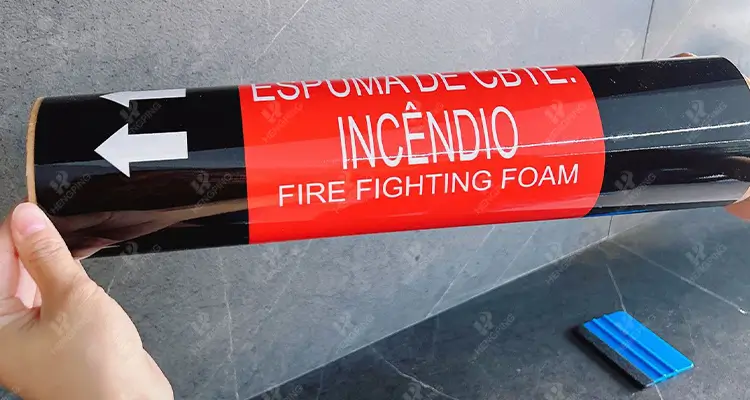
Why BS 1710 Matters in the UK?
While not a legally mandated standard, BS 1710 holds significant weight in the UK for several reasons:
- Clarity and Consistency: It promotes a unified approach to pipe marking, ensuring clear communication and reducing the risk of misinterpretation. This is crucial for safety, especially in complex industrial environments.
- Best Practice Guidance: It offers comprehensive guidance on color coding, labeling content, and other identification methods, consolidating best practices into a single accessible document.
- Industry Recognition: Widely recognized and adopted across various sectors, including energy, chemical processing, and water management, demonstrating its practical value.
- Alignment with Other Regulations: Complements other UK safety regulations like COSHH and DSEAR, providing specific guidance for pipeline identification within the broader framework of hazard management.
- Enhanced Safety: By promoting clear and consistent pipe identification, BS 1710 contributes significantly to a safer working environment, minimizing the risk of accidents and incidents.
BS 1710 Color Coding (Informative, not mandatory)
BS 1710 suggests a color-coding system based on the conveyed fluid’s nature. Remember, this is guidance, not a legal requirement. Common color associations include:
| Substance Category | BS 1710 Recommended Color | Examples |
| Water | Green | Potable water, Cooling water, Process water |
| Steam | Silver Grey | Steam, Superheated steam |
| Acids | Orange | Sulfuric acid, Hydrochloric acid, Nitric acid |
| Alkalis | Violet | Sodium hydroxide, Potassium hydroxide, Ammonia |
| Gases | Yellow | Oxygen, Nitrogen, Hydrogen, Methane, Compressed air |
| Air (ventilation) | Light Blue | Compressed air (for ventilation), Instrument air |
| Oils | Brown | Lubricating oil, Fuel oil, Hydraulic oil |
| Other Liquids | Black | Chemicals not otherwise specified, Fuels |
BS 1710 Labeling
Labels should contain clear and concise information, including:
- Fluid Name: The full name of the substance, avoiding abbreviations or jargon where possible. Consider adding the chemical formula for additional clarity.
- Hazard Warnings: Appropriate hazard symbols compliant with relevant regulations (e.g., CHIP, now superseded by CLP/GHS).
- Flow Direction: An arrow clearly indicating the direction of flow.
BS 1710 Supplementary Information
The supplementary information is optional but recommended where applicable:
- Pipe Material: Useful for maintenance and compatibility checks. Abbreviations can be used (e.g., PVC, SS for stainless steel).
- Pipe Size/Diameter: Important for system understanding and maintenance.
- Pressure: Operating pressure or pressure range.
- Temperature: Operating temperature or temperature range.
Alternative Identification Methods of BS 1710
When direct labeling isn’t practical or sufficient, BS 1710 suggests:
- Tags: Provide more space for detailed information, including safety procedures or emergency contact details. Durable tags are essential, especially in harsh environments.
- Marking Tape: A quick and easy method, particularly for temporary applications or color-coding long stretches of pipe. Ensure the tape is suitable for the environment and pipe material.
Important Considerations
- Legibility: Markings must be clearly visible and readable from a safe distance. Font size and contrast are crucial.
- Durability: Choose materials that can withstand the environment (temperature, chemicals, UV exposure).
- Accessibility: Ensure markings are not obstructed and can be easily seen during inspections and maintenance.
- Consistency: Maintain a consistent system throughout the facility to avoid confusion.
While BS 1710 is a valuable guide, remember that other regulations like COSHH and DSEAR may impose additional labeling requirements. Always consult the relevant legislation and seek expert advice for complete compliance. Using BS 1710 as a foundation alongside other regulations ensures a robust and safe pipe identification system.
Custom Pipe Label Solutions in UK
Hengping Industry provides custom pipe labels tailored to meet the diverse needs of UK industries. Unlike relying on outdated standards, we leverage our expertise to create labels that comply with the current regulatory landscape, combining the requirements of relevant HSE regulations and best practices from applicable BSI standards.

Our custom labels ensure clarity, durability, and longevity, minimizing the risks associated with inadequate pipe identification. We understand that the absence of a single, dedicated British Standard for pipe labeling requires a nuanced approach. Therefore, we work closely with our clients to understand their specific applications, ensuring our labels accurately reflect the content, hazards, and operational parameters of each pipeline.
This commitment to precision, combined with our high-quality materials and This commitment to precision, combined with high-quality materials and printing techniques, enables Hengping Industry to provide compliant and effective pipe labeling solutions that address the challenges of accurate pipeline identification in UK industries.
Conclusion
Effective pipe labeling in the UK requires understanding the interplay of BS 1710 and broader safety regulations like COSHH and DSEAR. A comprehensive approach, incorporating color coding, clear labeling, and supplementary information, ensures both compliance and workplace safety. Surely, Expert advice is always recommended.
Consider custom solutions for pipe identification labels, just contact us for technical parameters and real projects for references.



 English
  French
  German
  Spanish
  Portuguese
  Italian
  Dutch
Dutch  Turkish
  Russian
  Arabic
  Japanese
  Korean
  Vietnamese
  Thai
Thai  Indonesian